Tradition
Emotion
Innovation
This is turk


Insights into our world!
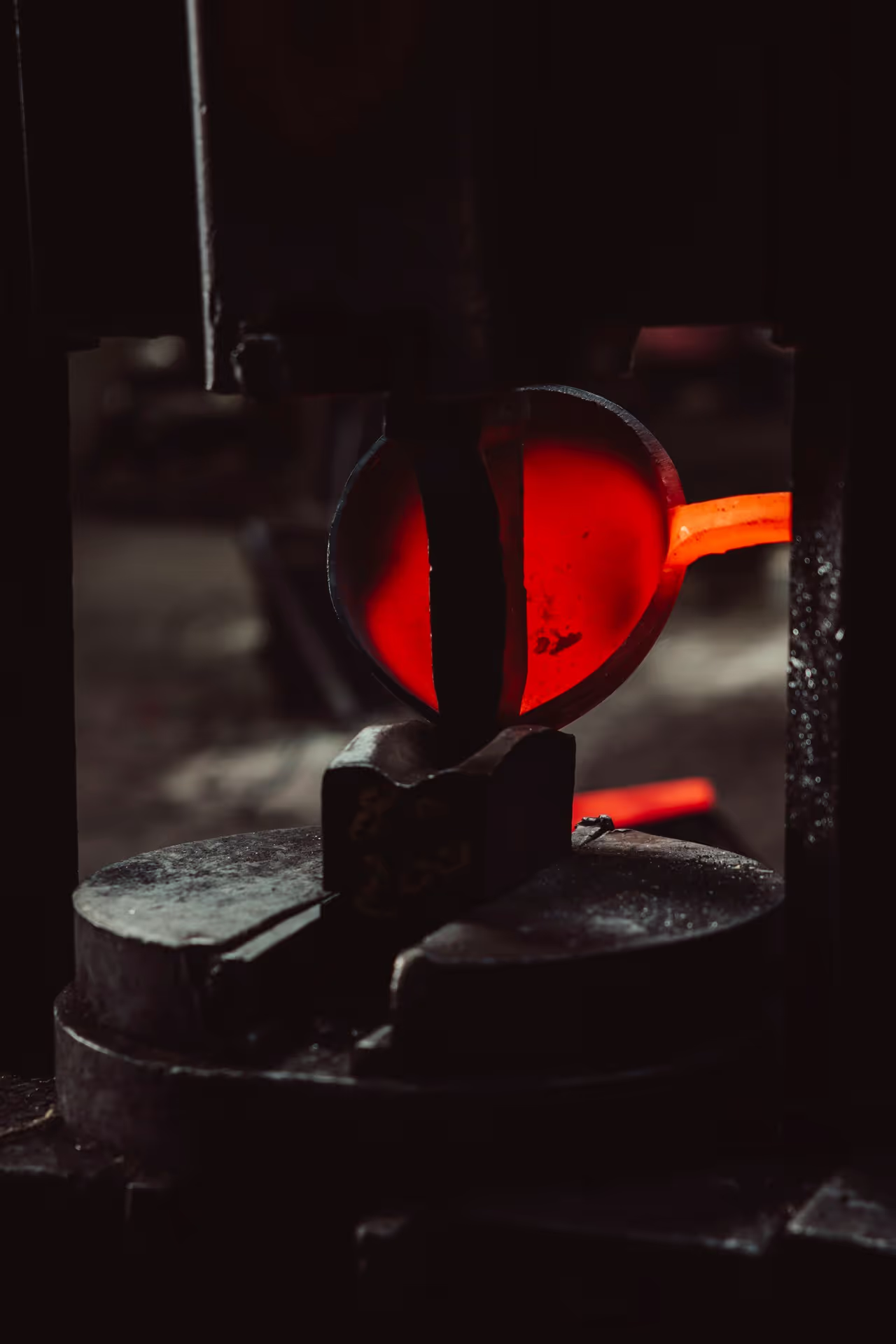
Experience how our products are created – crafted by hand or produced with state-of-the-art technology – and then become part of our customers' lives.

Our history
Today the company is run in the fifth generation by Hans Peter Turk and, together with his team, produces around 1,000 articles, most of which belong to the consumer goods sector.
1857
the beginning of the hammer mill (postcard view)
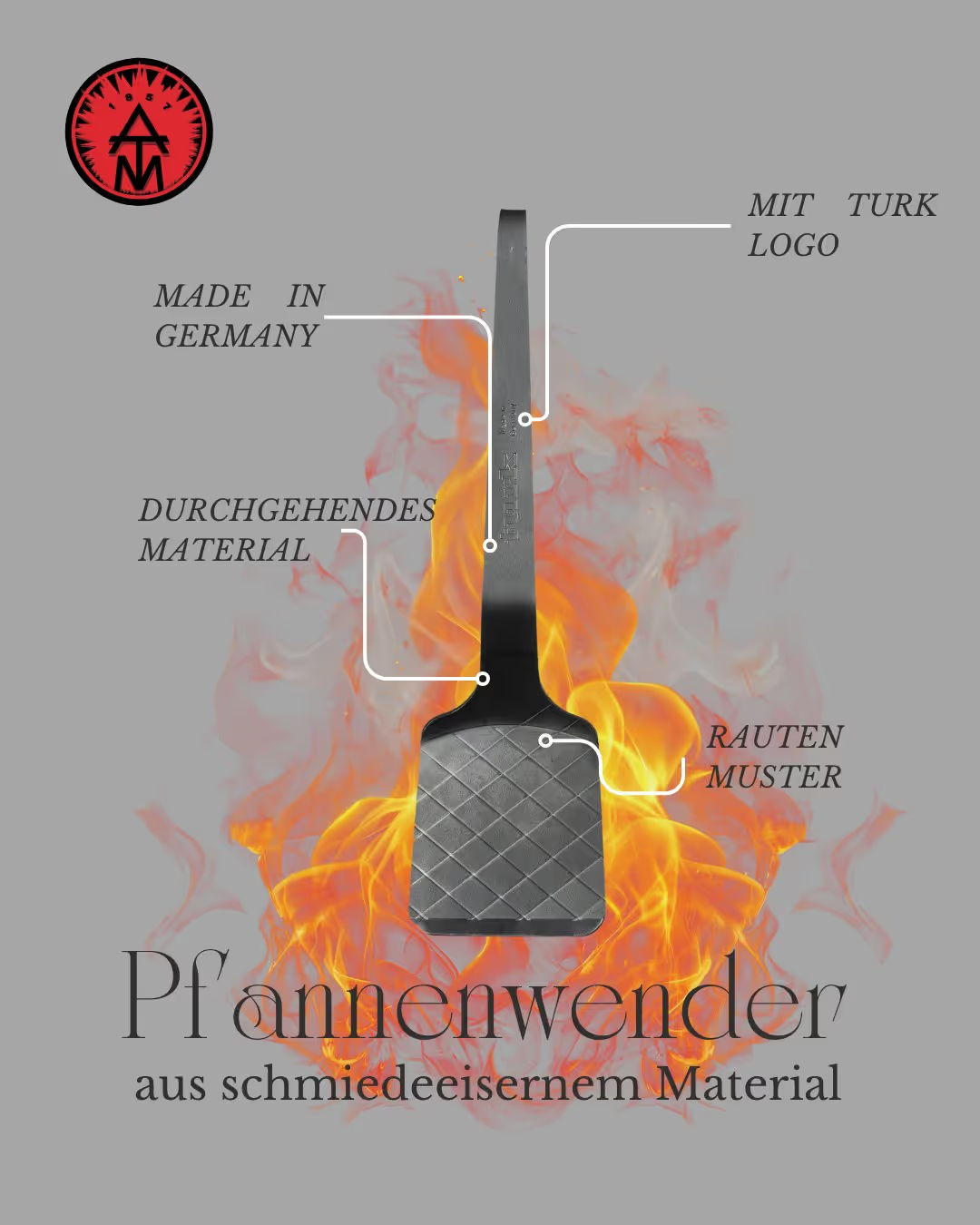
In 1857 the trained blacksmith Karl Turk set up a hammer mill in his father-in-law's mill. On the large flat hammer, shovels and pans were made that soon became known well beyond the immediate local area – a range that today, in numerous variants, is still one of our most successful product areas.

1910
the workforce around 1910
By around 1910 the workforce had already grown. At harvest time the workers went out to the fields, and for the rest of the year they worked in the hammer mill. The workers stayed on site during the week, for which there were the so-called "Hammerkämmer" – living and sleeping quarters for the workers, who only went home at weekends. These were demolished around 1910 in the course of the plant's expansion. In this photograph you can see, on the far left (with waistcoat and pipe), the founder's son Albert Turk, and second from the right his son Karl Albert Turk.

the first decades of the century
how things continued
As the hammer mill expanded, water power was no longer sufficient, and a portable steam engine was purchased to secure the power supply. This ensured the provision of production electricity and reduced dependence on water. In months with little water, electric drive was now possible; electricity was fed into the neighbourhood and Mühlhofe was lit by electric light at an early stage. In 1913 Albert Turk, the son of the company founder, passed away. His wife continued to run the company with their two sons Albert and Wilhelm as the 3rd generation. Although wartime changes to production severely hampered further development, they nevertheless succeeded in the following years in expanding the operation and broadening manufacturing. At the end of the war the water wheels were replaced by turbines, which made the old tail hammer redundant. Although these were difficult years, the soundly managed company survived the post-war period and came through the years of inflation unscathed.

1928
Frankfurt Trade Fair 1928
As early as 1928, Albert Turk Mühlhofe exhibited at the trade fair in Frankfurt. Here the grandfather of the current managing director stands in front of the extensive range that could be presented at the company's first trade fair appearance. The quality of the products was convincing and also gained recognition abroad. This led to a strong boost in export business.

until 1945
the Second World War
The Second World War initially led to stagnation and, for a number of articles, to a decline in production.

After the war
and on it goes
After the Second World War, Turk – like everyone else – had to make a fresh start. It was a successful new beginning that offered room for confidence and optimism. Production of household and fire tools as well as foundry tools was resumed, and output soon exceeded pre-war levels.

Economic Miracle
the era of the economic miracle
Karl Albert Turk in front of the office with the attached hardware shop that his wife ran. Foundry tongs in various sizes lean against the company's own truck. A typical photo of the German economic miracle! At that time his son, also called Karl Albert, was already part of the business.

1953
the great fire
On 24 June 1953 the company burned down completely; the offices, the hardware shop and the adjoining residential building were also affected. But the story continued! In 1955 the son Karl Albert Turk, and with him the 4th generation, was taken on as a partner.

1957
1857 – 1957: One Hundred Years of Albert Turk
The centenary celebration was held under the motto "What you have inherited from your fathers, earn it in order to possess it." (Goethe, Faust).

1957 to 2007
the next 50 years
Between 1957 and 2007, major changes took place in the stamping plant in the course of modernisation and automation, so that high-quality products adapted to the changing needs of the market could continue to be produced. This was a focus of the training of Hans Peter Turk, who joined the company as a mechanical engineer in 1986. In this way the 5th generation prepared the leap into the next century and millennium. In the hammer mill everything stayed as it had been in the founding years; in the stamping plant the company kept pace technologically and invested in progress.
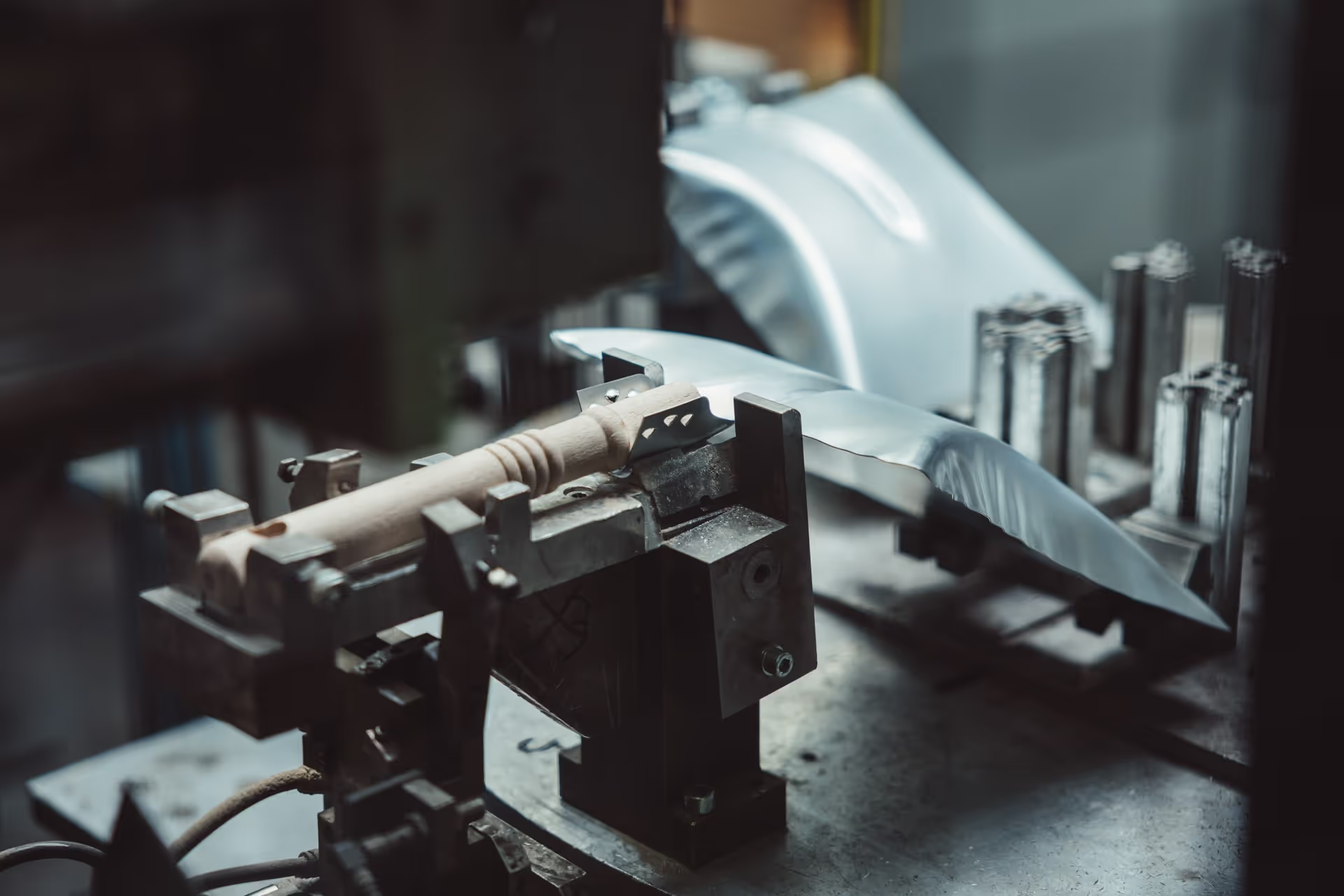
today
More than 160 years after the hammer mill was founded, Karolin Turk represents the 6th generation. We have stayed loyal to our location and still manufacture in the Sauerland region, thanks to the commitment of our employees, without whom none of this would have been possible. With our forged foundry tools we are among the world market leaders, delivering from the heart of North Rhine-Westphalia to destinations from Japan to Ecuador, and we have always stayed true to our principles. Turk stands for tradition – innovation – emotion, and that is how it should stay!!!

News from turk




.avif)

